Case 02 · PayPal · 2020–21
Merchant Settings
Unifying fragmented account settings into a Jobs-To-Be-Done framework.
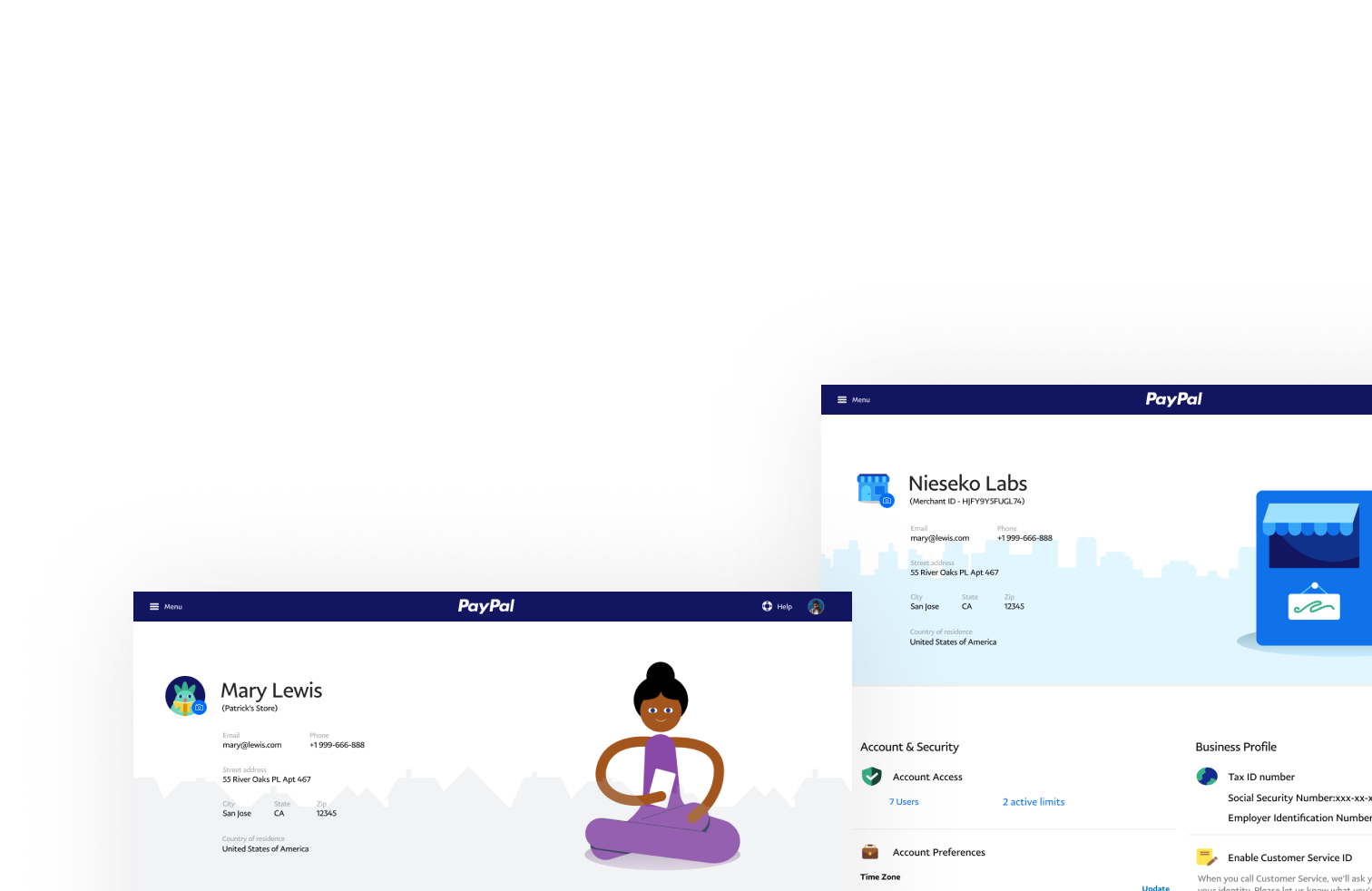
What is Settings
A merchant's account settings control their entire business operation — payment configuration, team access, settlement routing, integrations, security. But across PayPal's platform, settings had grown into a sprawl.
The goal: rebuild a unified, cross-product account settings framework that simplified deep configuration patterns, drastically improved discoverability, and produced visual harmony across the merchant environment.
Problem statement (Why was this needed?)
Different product lines featured disjointed navigation patterns. The same conceptual setting lived in three places, named three different things.
- Inconsistency — Settings styled and structured differently across products.
- Poor discoverability — Merchants frequently called support rather than search the UI.
- No shared architecture — Each new product team built settings UI from scratch.
- No JTBD framing — Settings were organised by backend taxonomy, not by what merchants came to accomplish.
The redesign needed to deliver a substrate every future feature could build on — not just a refreshed coat of paint.
User research & synthesis
Inconsistency across products
Audited the legacy navigation across product lines to surface the gap between what merchants expected and what each product shipped.
Competitor analysis
Direct and adjacent competitors
Benchmarked direct payments competitors and adjacent SaaS settings patterns — the patterns worth borrowing, and the ones to reject.
Information architecture
Unifying 3 products without breaking mental models
Each PayPal product had its own settings taxonomy and navigation logic. My job was to unify these into one coherent IA while preserving how existing merchants already understood where things lived — so the new structure felt familiar, not disruptive.
Final screens
Designing the unified experience
Three settings surfaces redesigned on the new IA — merchant, account, profile — sharing the same navigation grammar and component patterns.
Vision & future concepts
Where the settings product is heading
Future-state concepts for the settings product — merchant, account, and profile surfaces sketched on the new IA backbone, signalling where the experience goes next.
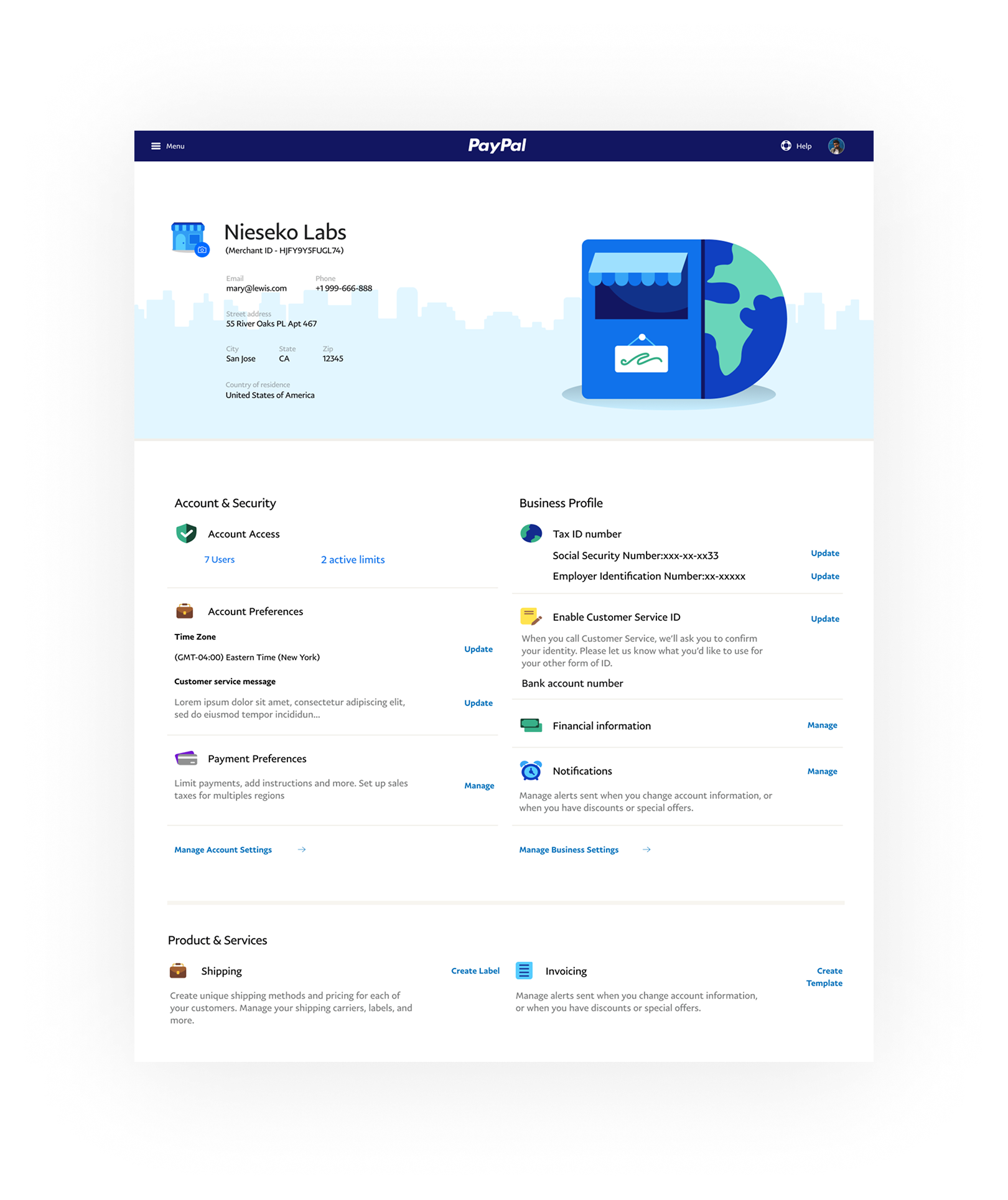
Merchant settings
The core operational hub — payment processors, team access, settlement routing, business profile.
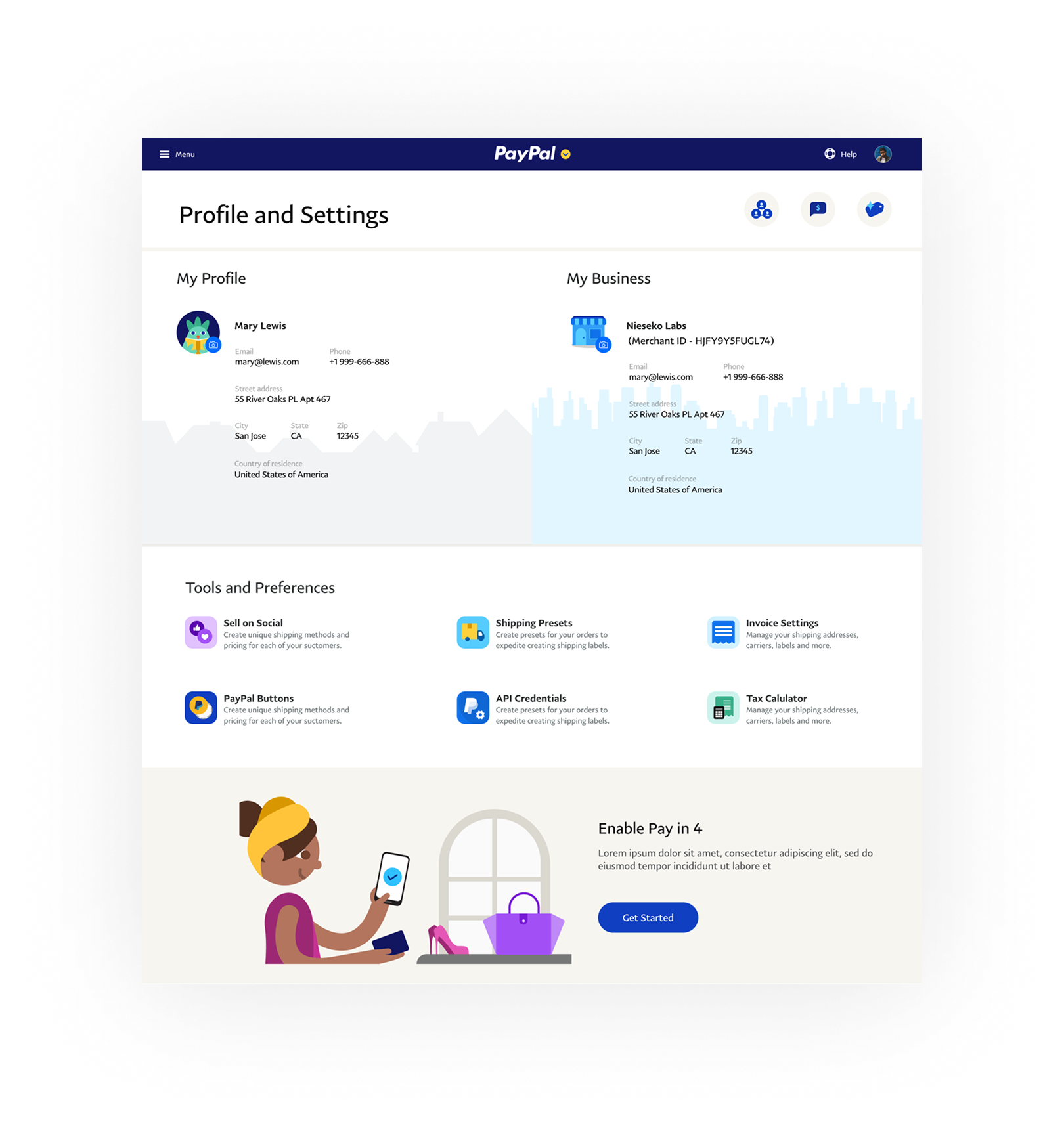
Account settings
Identity, billing, plan management — the things every account holder needs regardless of business size.
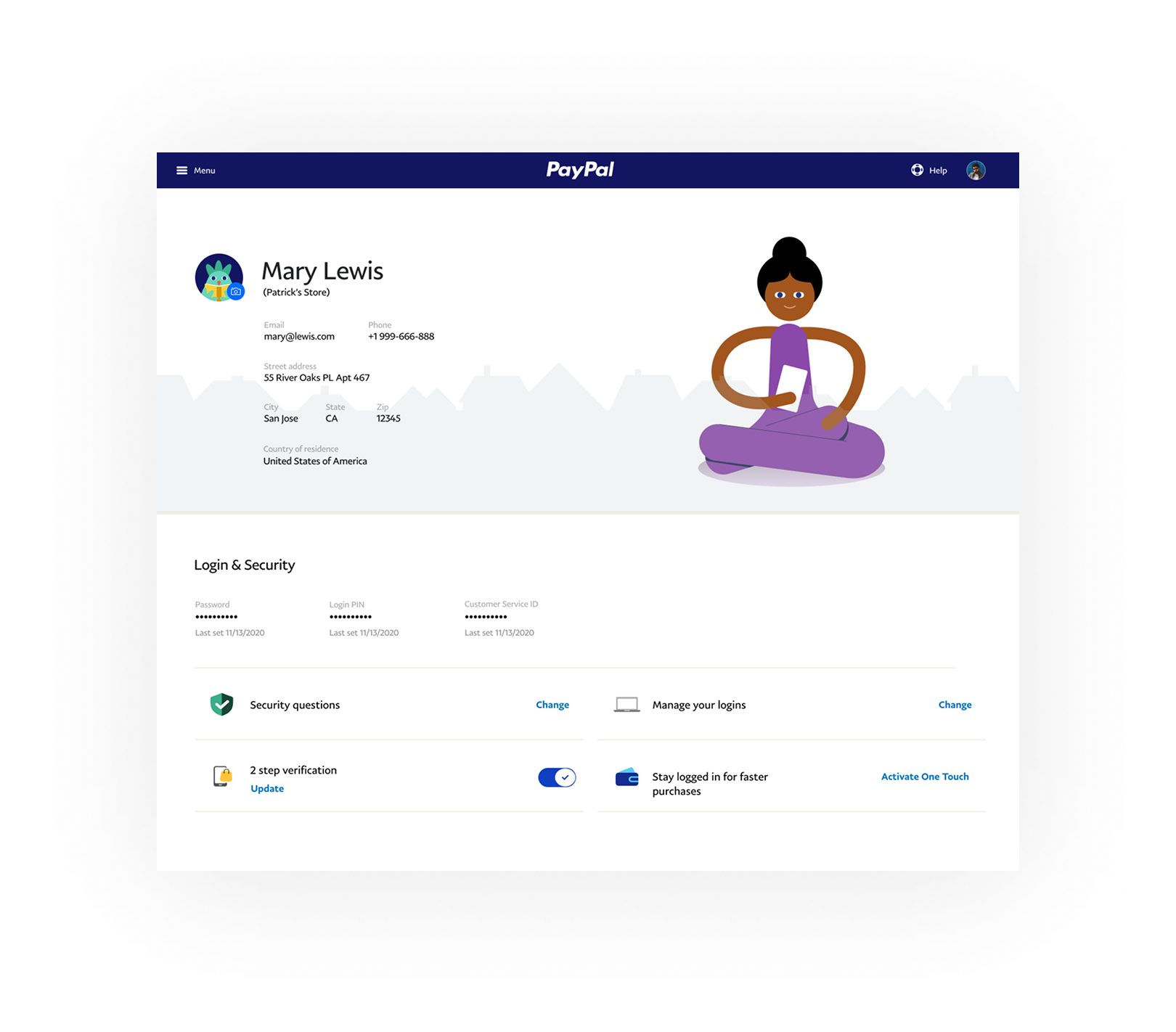
Profile settings
Personal identity layer — preferences, notifications, security — clearly separated from business configuration.
You've seen the preview
The full story — research, decisions,
ambiguity — is a conversation.
When we connect, I'll walk you through the full project in detail.